
Sound in Depth: Expanding the Practice of Sound Therapy
Deepening online classes and continuing education resources designed for sound therapy practitioners and dedicated enthusiasts who wish to expand their skills and understanding.
PART 1
Time, Consciousness and The Nature of Sound: The Link Between Sound and Human Consciousness.
Sound has been considered a gateway to the divine for centuries, a living movement that shapes our perception of reality. Throughout history, sound has always played a central role in spiritual and religious rituals because of its ability to alter awareness, open inner states, and connect us with the sacred. In this session, we’ll explore why sound has been recognised as a consciousness-changing element and how it can help us experience time and presence in new ways.
PART 2
Bridging Science & Practice: How to Apply Research to Sound Healing.
Modern research in neuroscience, psychoacoustics, and vibroacoustic therapy is shedding light on how sound and vibration affect the human body and mind at physiological and neurological levels.
For practitioners, this knowledge is very valuable.
It allows you to fine-tune your work by choosing instruments and techniques with precision, complementing intuition with knowledge.
By understanding why a technique works, you can deliver sessions that are both deeply therapeutic and scientifically informed.

PART 3
Sound and Neurodivergence: Integrating Modern Therapies with Traditional Instruments
Neurodivergent individuals (including those on the autism spectrum, with ADHD, sensory processing disorders, etc.) often experience atypical auditory processing and sensory sensitivities. Sound-based interventions have gained traction for their potential to recalibrate neural pathways, influence autonomic nervous system regulation, and support sensory integration. Modern therapeutic approaches, from specialised listening programs to music therapy, are being studied alongside ancient practices like Tibetan singing bowls and tuning forks.
While traditional sound healing instruments are not a replacement for evidence-based therapies (rather a complementary tool), their use can be grounded in known physiological mechanisms (e.g. vibrational stimulation of mechanoreceptors and vagus nerve activation) to subtly enhance outcomes. This class provides an interesting overview comparing modern sound therapies with traditional instruments, emphasising a practitioner-oriented perspective that is scientifically viable yet practical.
Note: The content of this series is also available in the Sound Studies Library.
Check our articles

Sound Therapy and Sleep
Sleep is one of those things that tends to reveal a great deal about the state of a person's nervous system. When the system is genuinely at ease, sleep arrives without much effort. When it is under chronic strain, a quiet bedroom can become an unexpectedly difficult...
432 Hz – Does Frequency Have a Meaning?
The discussion around tuning music to 432 Hz continues to evoke strong responses. For some, it represents a return to natural harmony. By others, it is dismissed as pseudoscience wrapped in attractive language. Between these positions lies a more useful question: what...
Sound for Regulation and Connection in Pregnancy and Birth
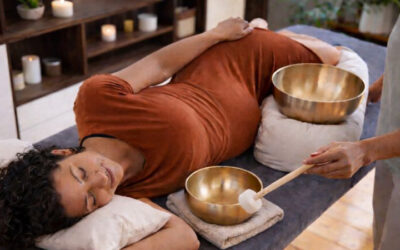
How Sound Becomes a Practical Ally in Pregnancy and Birth In my previous article, Sound Therapy in the Field of Pregnancy and Birth, I spoke about the profound role sound plays in early life. But once people understand its importance, the next question naturally...